
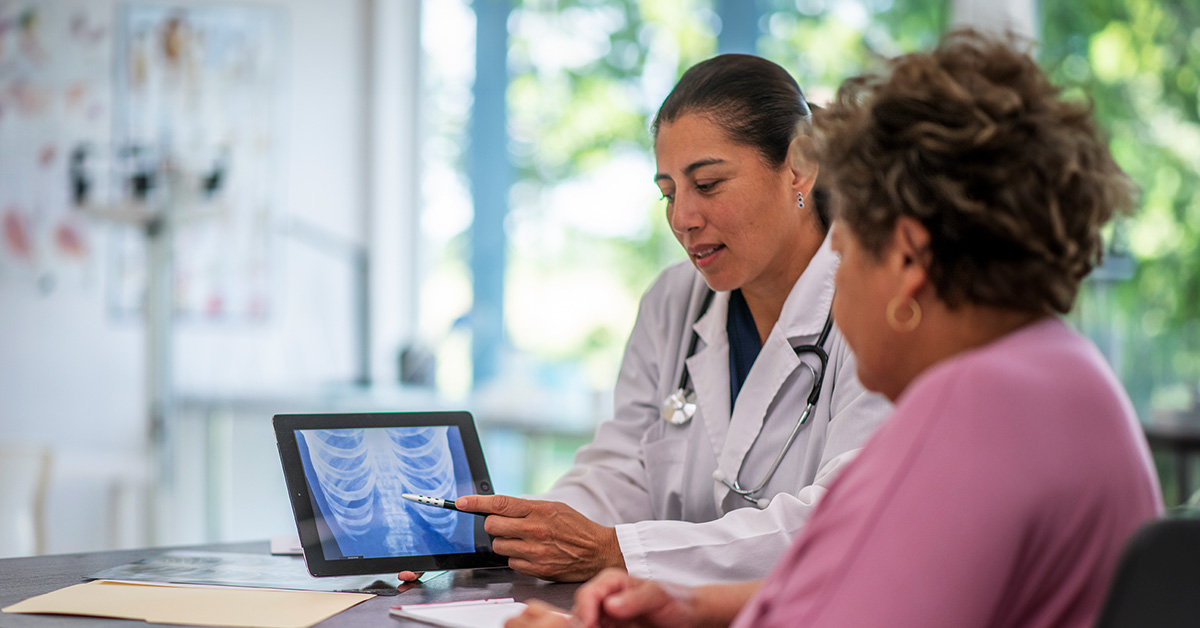
Scans Save Lives: The Basics of Lung Cancer Screenings
Test, Don’t Guess: How and Why Early Lung Cancer Screening is Important
Lung cancer is the third most common cancer in the United States. And it often develops quietly, with little or no symptoms in its earliest stages. While these two facts taken together can seem daunting, this knowledge turns into power and protection from early detection with lung health screening.
Why Lung Cancer Screening Matters
Early lung cancer detection allows your lung specialist to identify potential problems before they become more serious. When providers find cancer at its earliest stages, treatment is often more effective and less invasive. Early detection also gives patients access to more treatment options than they would have if the cancer had been allowed to progress. In many cases, finding lung cancer early significantly increases the chances of remission or being cured.
Some patients receive an early lung cancer diagnosis despite having no noticeable symptoms. Others may experience subtle warning signs such as fatigue, a persistent cough, or hoarseness. While these symptoms can stem from common illnesses or age-related changes, they can also signal an underlying lung condition that warrants further evaluation.
When patients wait until symptoms become severe, treatment often becomes more complex. Coughing up blood, recurrent pneumonia or bronchitis, and difficulty swallowing can all indicate more advanced disease. At that stage, patients may require more aggressive treatment and face less favorable outcomes. Because survival rates are highest when lung cancer is detected early, screening remains one of the most effective tools for saving lives.
Who Should Get a Lung Cancer Screening?
If you are 50 to 80 years old, are a smoker, or have certain risk factors (such as having received previous radiation therapy, a family history of lung cancer, or being exposed to certain chemicals at work), you should be screened for lung cancer. Lung cancer screening for former smokers is also common if you meet certain pack-per-year history requirements.
While this is a broad framework, a seasoned and well-respected pulmonary clinic in Birmingham such as the Birmingham Pulmonary Group has the training and knowledge to determine whether a lung disease screening would be appropriate based on your specific health history.
When to schedule a lung cancer screening is ultimately up to you and your provider – though the sooner you have it, the more time you have on your side either for treatment or peace of mind.
What to Expect During a Lung Screening Appointment
If your provider confirms you should be screened for lung cancer, you’ll be referred for a low-dose CT scan (LDCT). This type of CT lung screening is the gold standard for early detection of lung problems. It uses a low-dose of radiation to give physicians a more complete view of your lungs. While the dose of radiation is approximately equal to the background radiation you’re exposed to in 6 months of everyday life, it’s about 75% less than a standard chest CT used for other diagnostic purposes, according to the American Lung Association. You won’t be given an IV or asked to swallow anything for a LDCT.
It’s relatively quick – you’re in and out in around the same time as a clinic appointment. A LDCT requires essentially no prep, except to remove any metal objects you’re wearing (jewelry, watches, and the like) and maybe changing into a hospital gown moments before it happens. But if you’re not feeling well on the day of the scan, let your technician know as you might need to reschedule.
The scan itself takes around one to two minutes. You’ll be positioned flat to pass in and out of a machine that will take numerous pictures of your lungs.
After the scan is complete, you’re free to go about your day with no down time. Your provider will likely reach out to you in a few business days to discuss the results. Click here to learn more about how Birmingham Pulmonary helps patients with lung screenings.
Common Reasons People Put Off Screening
No one really wants more doctor visits or clinical imaging. But taking these few minutes to be screened before symptoms start will pay dividends to your mental and physical health to accurately know the health status of your lungs.
Busy schedules may make it tempting to cancel a screening, especially if you’re feeling fine. Perhaps you have concerns about onboarding with a pulmonologist or having a LDCT done for the first time. While these are all valid concerns, they shouldn’t make you delay your lung cancer screening. Keeping your lung screening appointment matters –your future health will thank you for this small investment upfront.
Why Keeping Your Appointment Matters
It may seem counterintuitive to be screened for lung cancer before you notice symptoms, almost as if you’re looking for a problem that isn’t there. But really, it’s the smart choice. In fact, for Stage 1A (earliest stage of lung cancer), 5-year survival rates can be over 90% according to the National Institutes of Health (NIH).
Establishing care with a pulmonologist (meaning receiving testing and not guessing to learn more about your lungs right now) can safeguard your health for decades to come.
How Birmingham Pulmonary Group Supports Patients Through the Process
Birmingham Pulmonary Group will guide you through what it looks like to accurately evaluate your respiratory health from your initial appointment. Our Birmingham Pulmonary specialists will determine if you qualify for a lung cancer screening after a detailed health history. They’ll also coordinate care and any follow-ups needed after the results are in.
Bring your questions and concerns to each appointment, knowing that you’ll be met with the highest standards and most welcoming blend of pulmonary care, patient education, and empathy.
Now is the Time to Optimize Your Respiratory Health
Empower your preventive health by learning if a lung cancer screening is right for you. Reach out to Birmingham Pulmonary Group to schedule an appointment today.